Train through it,
not around it.
Niggly tracks your pain day to day and tells you when to push and when to back off, so you keep training instead of just resting.
Physio? See Niggly for physios.
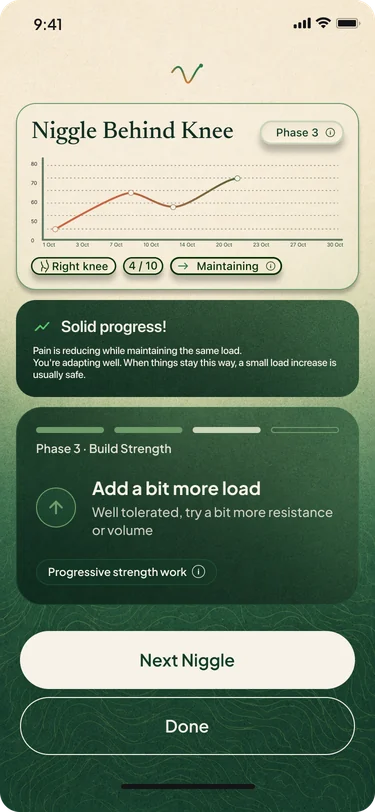
Built on an established clinical model (Silbernagel et al., 2007) with long-term follow-up data and cross-sport validation, consistent with the broader evidence base on exercise-induced pain in musculoskeletal rehab.
Check in. Read the signal. Know what to do next.
Pain measured the morning after training tells you whether your body adapted to yesterday's load, not what you felt mid-session. That's the signal Niggly reads, every day.
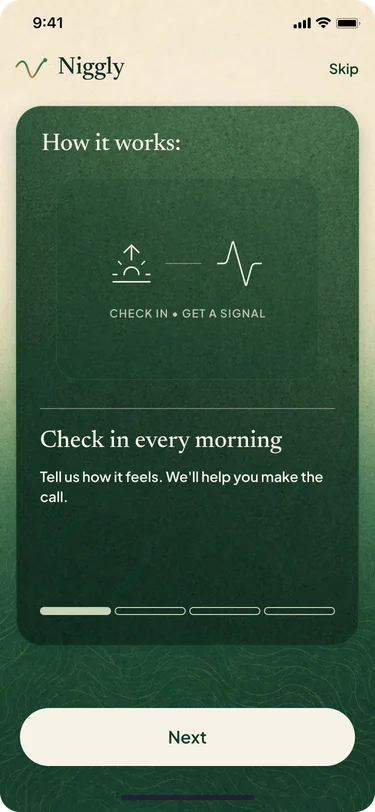
Step 1: Log your morning
One number, once a day: how it feels today. When you train, log your session load too, so tomorrow's morning shows how your body handled it.
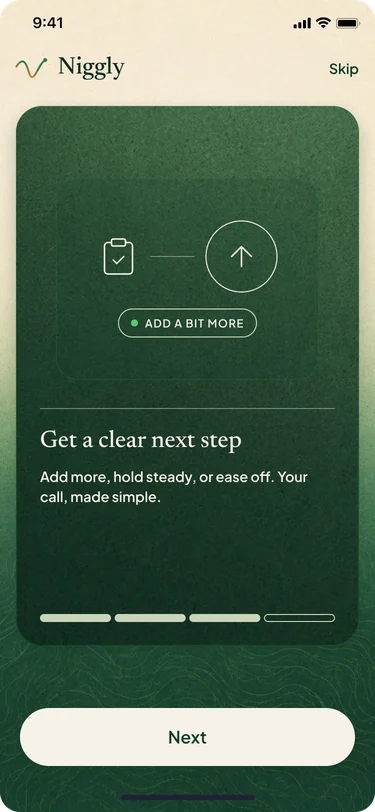
Step 2: Get a clear next step
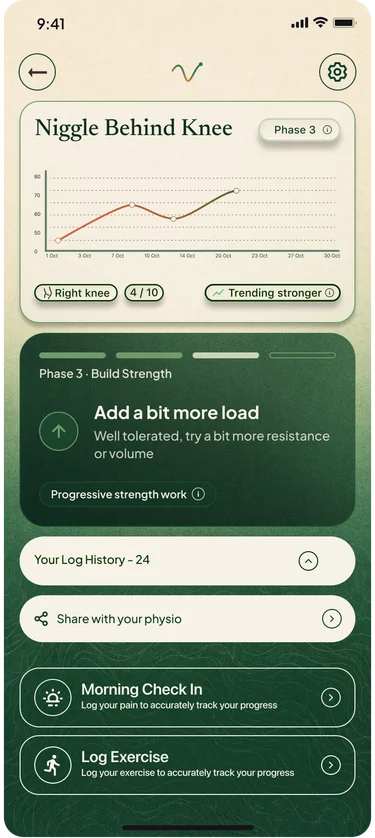
After every morning log, Niggly tells you what to do next: add a little load, hold where you are, rest, or step back. It suggests. You decide.
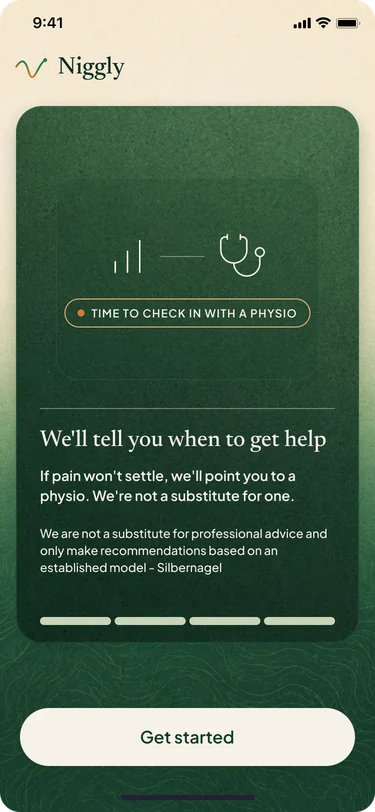
Step 3: Know when to see a physio
If your mornings keep coming in over your limit, Niggly points you to a physio. It supports your decisions. It isn't a substitute for one.
Your trend is the summary of the picture over time. Your pain limit and how you respond the next morning are what drive your next step.
“Built by an average trail runner, for those who'd rather be back on the trails than sat on the sofa.”
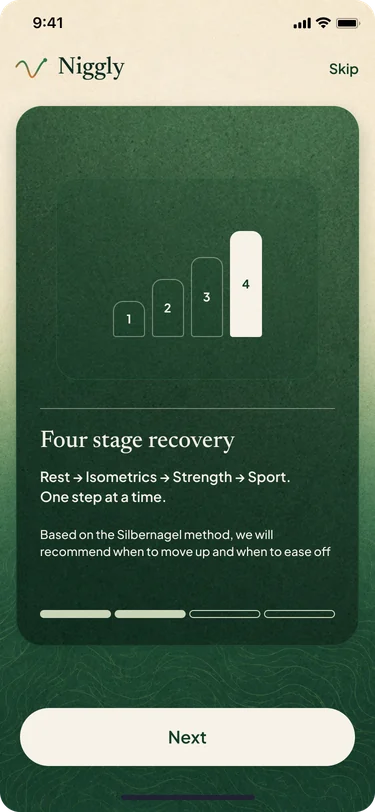
Four phases, then Maintenance.
You move through them at the pace your own pain allows, never on a calendar. Go back a phase if you need to. That's normal, not a setback.
Rest & Settle
Isometric Exercises
Build Strength
Sport & Impact
Then Maintenance Mode, once full training is back and Niggly keeps watching for a flare-up.
Your pain limit sets the pace.
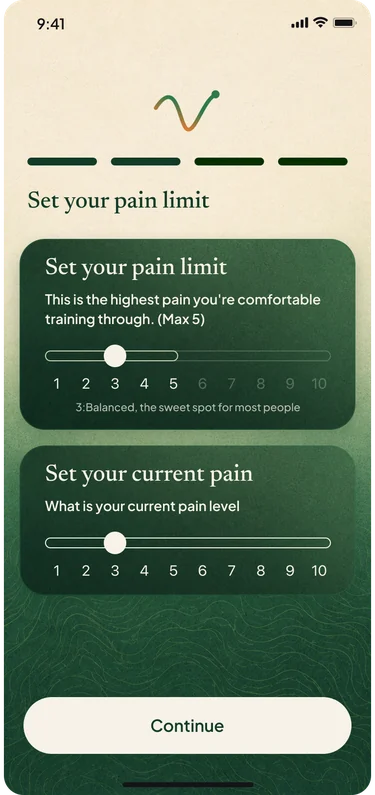
You set a pain limit for each niggle (called your pain threshold in the app). Keep your morning pain at or under it and Niggly keeps you moving.
Progress comes from adding load your body handles well the next morning. A morning over your limit means ease off. A run of them means stepping back a phase, or seeing a physio.
Take the data to your appointment.
Physio sharing is coming to Niggly. It lets your physio see how a niggle has actually been, instead of relying on memory.
- Your choice. Nothing is shared unless you send it.
- One niggle at a time. Pick the niggle and enter your physio's email.
- Stop any time. End the share in the app and their access ends straight away.